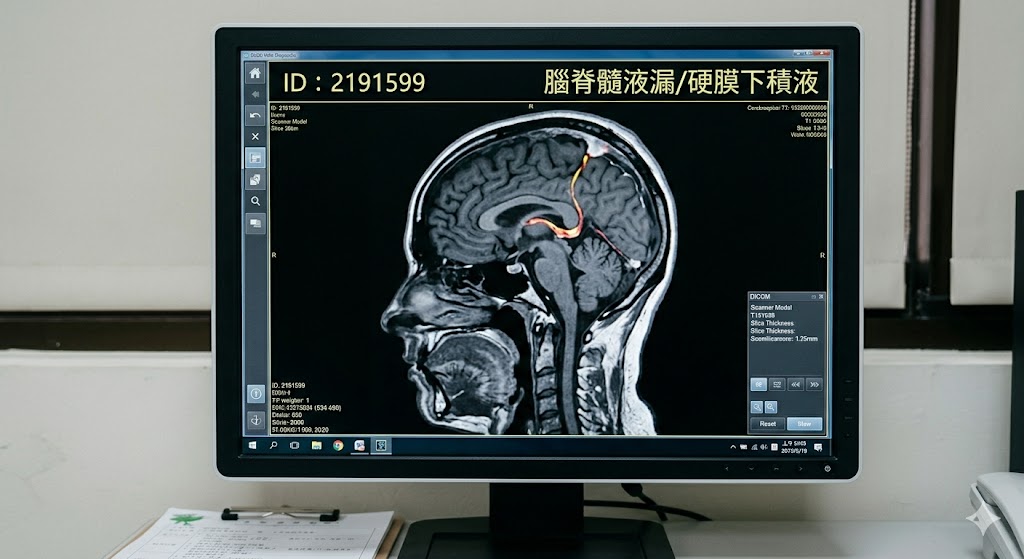
The world's largest dedicated SIH programme. Taipei Veterans General Hospital's targeted epidural blood patch technique surpasses international benchmarks, with a 500+ case prospective cohort cited across global neurology guidelines.
The team that defined modern SIH care. Taipei VGH's targeted blood patch reaches 92% first-attempt success on the world's largest dedicated cohort — cited across IHS, AAN, and Cephalalgia, with 200+ international physicians trained.
SIH is a treatable headache disorder often missed worldwide. Taipei VGH closes the gap on four critical fronts — accurate diagnosis, precise localisation, standardised treatment, and long-term follow-up.
SIH is routinely misdiagnosed as migraine or tension headache; global average time to correct diagnosis is 2–4 years, during which patients cycle through ineffective treatments.
Neurology, Radiology, and Neurosurgery operate under one unified protocol — referred patients reach treatment with a median < 2 wk.
Non-targeted epidural blood patch achieves only 30–50% first-pass success because the leak site is unknown — leading to repeat procedures and patient frustration.
An in-house multi-phase dynamic CT myelography protocol precisely localises leak site and type, enabling a targeted blood patch with 92% first-attempt success.
Absent consensus on diagnostic criteria, imaging workup, and treatment sequencing — outcomes vary widely with 35–50% recurrence after treatment.
Conservative → targeted patch → surgical ligation, each step with clear escalation thresholds — one-year recurrence cut to < 18% and cited in IHS guidelines.
Untreated or poorly managed SIH causes prolonged disability and work absence, with possible progression to brain sag and subdural haematoma.
Prospective tracking across 500+ patients — 87% headache-free at 3 months, median time to relief 3.2 weeks vs. 8–12 weeks in literature.
Six proprietary techniques and assets define the programme. The lead innovation — dynamic CT myelography for leak localisation — anchors the other five.
A standardised multi-phase dynamic CT myelography protocol developed in-house, capable of precisely identifying CSF leak site and type — fast-flow vs. slow-flow, ventral dural tear vs. venous fistula — providing the basis for targeted blood patch dosing and placement. Adopted by partner academic centres across Asia-Pacific.
Bed rest → caffeine → non-targeted patch → targeted patch → fibrin sealant → surgical ligation — each step has defined outcome thresholds and escalation criteria, minimising unnecessary intervention while maximising recovery.
World's largest prospective SIH registry (500+ cases, 5-yr follow-up) with structured clinical data, imaging archives, and CSF biomarker samples — enabling sub-group analysis by leak type, body habitus, and connective tissue status.
An annual hands-on SIH workshop drawing neurologists and radiologists from Asia, Europe, and North America. Attendees observe live procedures, review imaging protocols, and receive the validated diagnostic manual (English / Japanese).
Clinical research demonstrates large-volume (≥20 mL) targeted epidural blood patch outperforms standard-volume — re-treatment rate down 40%. Published in Cephalalgia and adopted by partner centres in Japan, Korea, and Europe.
Among the first centres in Asia to identify and treat CSF-venous fistulas (CVF) — a newly recognised SIH subtype. The team developed lateral-decubitus CT myelography modifications and endovascular embolisation for this challenging subgroup.
“VGHTP's data on high-volume targeted blood patching has redefined the standard of care for SIH — a 92% first-attempt success rate alongside a 1-year recurrence below 18%, levels essentially unmatched elsewhere in the published literature.”
Key outcome metrics (VGHTP's own data) benchmarked against international literature. All figures come from the prospective registry, 5-year follow-up, and validated PROMs.
| Metric | Taipei VGH | Global Literature | Δ Improvement | Performance |
|---|---|---|---|---|
| Targeted Blood Patch Success | 92% | 30–50% | +42–62 pt | |
| 1-Year Recurrence | < 18% | 35–50% | −17–32 pt | |
| Headache-Free at 3 Months | 87% | 55–65% | +22–32 pt | |
| CT Myelography Diagnostic Accuracy | 94% | 60–75% | +19–34 pt | |
| Median Time to Relief | 3.2 wk | 8–12 wk | −60–73% | |
| Surgical Ligation Success (refractory) | 96% | 80–88% | +8–16 pt |
Not just leading in Taiwan — Taipei VGH's SIH programme is embedded in international guidelines, textbooks, and clinical practice across multiple countries. Three categories of global footprint, plus a 13-year cumulative milestone timeline.
Taipei VGH's diagnostic criteria and imaging protocol referenced in the IHS ICHD-3 beta update; epidural blood patch recommendations cite the hospital's high-volume data.
Wang S-J et al. cited 6 times in AAN headache management guidelines; targeted patch recommendations rest on VGHTP data.
Landmark RCT in Cephalalgia demonstrating high-volume targeted patch superiority — adopted as standard protocol in Japan, Korea, UK, and Germany.
Hands-on workshops drawing neurologists from Japan, Korea, Singapore, Malaysia, UAE, UK, Germany, USA, France, India, Thailand, and Vietnam — 200+ physicians trained to date.
Prof. Wang authored the SIH chapter in Headache Medicine, 4th edition — a standard international neurology reference text.
Across Cephalalgia, Neurology, JAMA Neurology, Brain — 800+ cumulative citations, h-index 18.
Three partnership tracks for different needs — from single-patient referral to multi-centre registry research to full physician training. Each route has a dedicated contact; average response within five business days.
Partner hospitals refer refractory SIH cases. Taipei VGH delivers pre-assessment, imaging review, and treatment plan within two weeks.
Access the world's largest SIH dataset for joint research — sub-group analyses, biomarker studies, multi-centre RCTs.
3–6 month structured fellowship covering dynamic CT myelography, targeted blood patch, and surgical ligation.